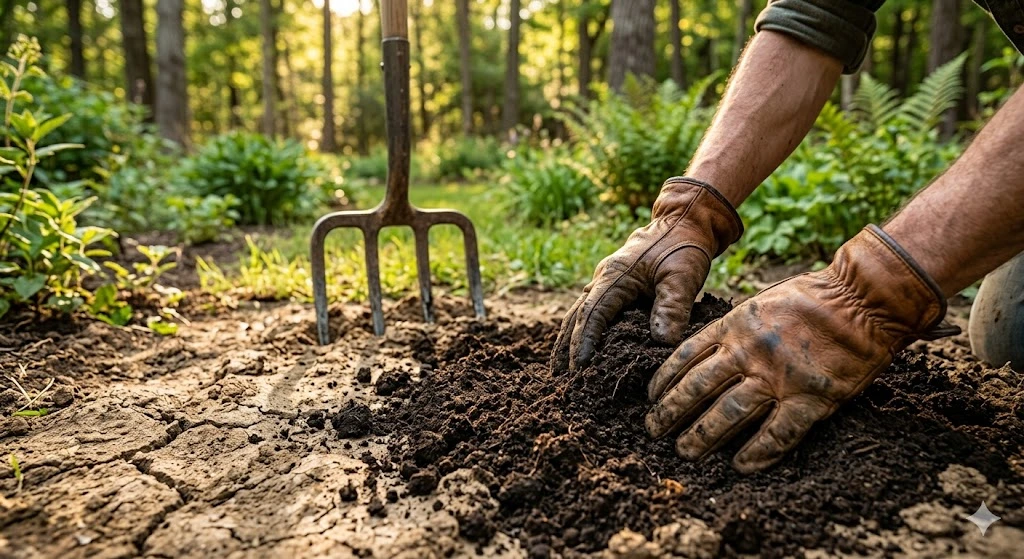
If you are gardening in heavy clay, you already know the struggle. In the spring, it’s a boot-sucking, waterlogged mess. By mid-summer, it bakes into a cracked, impenetrable brick that bends your favorite trowel.
When I first started transforming a neglected, compacted plot into a thriving forest garden, I was told the only solution was to order expensive truckloads of topsoil. But burying the problem isn’t just expensive—it’s a temporary band-aid. The secret to a resilient, low-maintenance garden is working with what you have.
The good news? Clay soil is actually incredibly rich in nutrients. It just lacks the structural porosity to let water, air, and roots move freely. Here is exactly how to fix clay soil fast, improve your drainage, and build a lush forest garden—without buying a single bag of topsoil.
1. Do Not Add Sand (The Ultimate Rookie Mistake)
Before we talk about what to add, we need to address the most common myth in gardening. It sounds logical: clay is sticky, sand is gritty, so mixing them should create perfect loam, right? Wrong. Mixing sand into heavy clay creates a substance that closely resembles low-grade concrete. Unless you can afford to add an exact 1:1 ratio of sand to clay across your entire property (which is physically and financially absurd), skip the sand entirely. Your soil needs biology, not just minerals.
2. Mechanically Open the Soil (The Fast Fix)
To get fast results, you need to introduce oxygen into the ground immediately. Heavy clay particles are packed so tightly together that roots literally suffocate.
Instead of turning the soil completely over with a rototiller (which destroys the delicate soil food web and brings weed seeds to the surface), use a method called “deep ripping” or aeration.
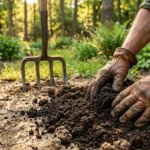
- The Broadfork Method: A heavy-duty broadfork is arguably the best investment a forest gardener can make. By stepping on the tines and rocking the handles back, you crack the hardpan up to 12 inches deep without inverting the soil layers.
- Core Aeration: For larger, flatter areas, using a manual or gas-powered core aerator physically removes plugs of clay, leaving holes for water and organic matter to fall into.
3. Apply Gypsum to Break Up the Clay
If your clay soil is highly sodic (heavy in sodium) and clumps together like modeling clay, adding garden gypsum (calcium sulfate) is a fast-acting, organic solution.
Gypsum works on a chemical level through a process called flocculation. The calcium pushes the sodium particles apart, causing the ultra-fine clay particles to clump together into larger, crumbly aggregates. This immediately improves drainage and air circulation.
- Pro Tip: Apply granular gypsum at a rate of 40 pounds per 1,000 square feet. Water it in deeply. You will notice a textural difference in the top layer of soil within just a few weeks following heavy rain.
4. Top-Dress with Massive Amounts of Organic Matter
This is the core of the “no-dig” forest gardening philosophy. Instead of buying topsoil, you are going to let nature compost it in place.
Once you have aerated the soil with a broadfork and applied gypsum, layer 3 to 6 inches of organic matter directly on top of the clay. Worms and soil microbes will do the heavy lifting, pulling this decaying matter down into the clay tunnels you just created.
The best free or cheap sources of organic matter include:
- Arborist Wood Chips: Call local tree care companies. They often dump fresh wood chips for free. These are exceptional for fungal pathways.
- Leaf Mold: Shredded autumn leaves are a premium soil conditioner.
- Aged Manure or Compost: If you have budget for anything, spend it on high-quality compost or compost tea to kickstart the microbial life.
5. Biological Tilling: Plant “Tillage Radishes”
If you want to fix your clay soil over the fall and winter while doing zero physical labor, let cover crops do the work.
Daikon radishes (often sold as “tillage radishes” or “forage radishes”) have thick, aggressive taproots that can drill deep into compacted clay hardpan. Broadcast these seeds in late summer. They will grow massive roots. When the winter frost kills them, the radishes rot directly in the ground. This leaves behind deep, nutrient-filled channels that act as natural drainage pipes for spring rains.
The Bottom Line
Fixing clay soil without buying topsoil is entirely possible, and frankly, it yields a healthier garden ecosystem in the long run. By cracking the soil open with a broadfork, breaking the chemical bonds with gypsum, and feeding the surface with heavy organic matter, you will transform that boot-sucking mud into rich, dark, forest-floor loam.
Have you struggled with heavy clay in your garden beds? What organic matter are you planning to use this season? Let me know in the comments below!