If you garden, you have seen them: a shimmering, sucking, grotesque cluster of aphids colonizing the tender new growth of your prized roses, peppers, or kale. Aphids are the vampires of the garden, draining plant vitality and introducing diseases.
When I first established my forest garden, I was overwhelmed by an aphid population explosion. I was told that the natural, sustainable solution was to either release an army of ladybugs or make a “simple” home remedy using dish soap. But which method actually works?
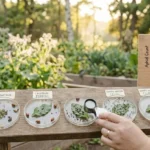
We decided to move beyond anecdotal “it worked for me” evidence and perform a controlled, multi-week test in our forest garden beds to determine the true champion of aphid control. Here is exactly what we found.
The Problem with Anecdote
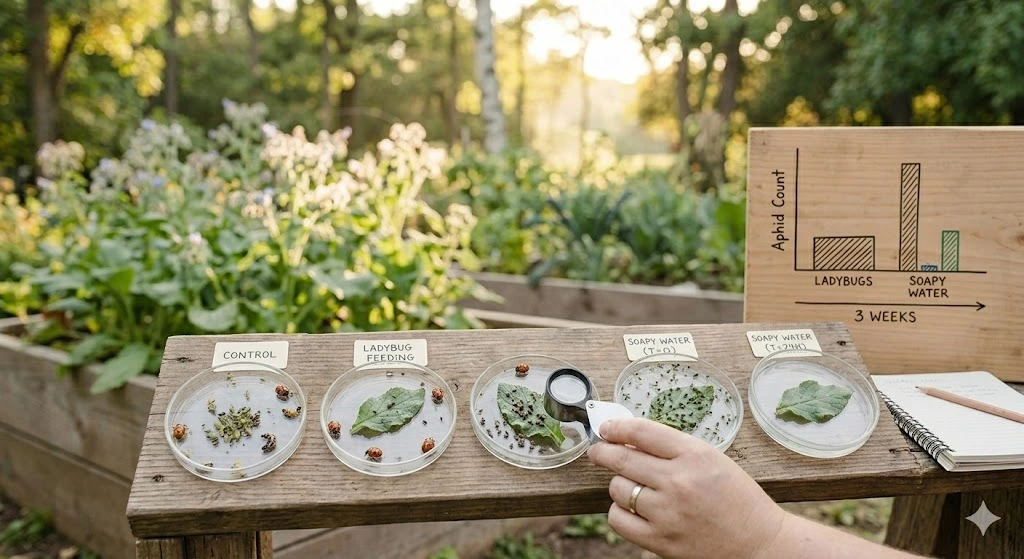
Most aphid control advice is based on short-term observation. You spray a plant with soap, and an hour later, the aphids look dead. Success! Or you release ladybugs, and they start eating immediately. Success! But true, sustainable forest gardening demands evidence-based results that look at long-term effectiveness, plant health, and ecosystem balance. Our test ran for three weeks on comparable sections of heavily infested borage.
Candidate 1: Soapy Water (The DIY Insecticide)
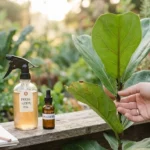
The common recipe is simple: mix 1-2 tablespoons of a mild dish soap (like Castile) with a gallon of water and spray. The theory is that the soap breaks down the soft exoskeleton of the aphid, causing dehydration and death.
The Test Results: In our test, the soapy water provided an immediate, dramatic knockdown. Within four hours, 95% of the visible aphids on the treated leaves were dead or inactive. For a quick fix, it seemed like the clear winner.
However, the myth is that this provides a lasting solution. We found that the aphids that escaped (hiding on the underside of leaves or deep in a curl) quickly reproduced. Within one week, the treated plant section was nearly 50% re-infested. Crucially, the soapy plant required weekly repeat applications, and by week three, the plant cuticle was showing signs of stress and minor leaf burn (phytotoxicity) from repeated soap contact.
Candidate 2: Ladybugs (The Biological Control)
Releasing laboratory-reared convergent ladybugs (Hippodamia convergens) is the classic bio-control advice. One ladybug can eat up to 5,000 aphids in its lifetime. The theory is that the predator population will match the prey.
The Test Results: The problem here is immediate gratification. We released 1,000 ladybugs at dusk into the test plot. By morning, a surprising number had flown away. The initial impact was slow, and our first measurement at 24 hours showed only a modest 40% reduction in aphids.
But then, the real magic happened. We stopped seeing massive clusters. Over two weeks, the remaining ladybugs patrolled the leaves meticulously, keeping aphid counts extremely low. There was no plant damage, and more importantly, by week three, the ladybugs had reproduced. A local population of ladybug larvae (which look like tiny alligators and are even more voracious) emerged, maintaining perfect balance in the entire garden bed.
The Bottom Line: The Ecosystem Winner
Our evidence-based test revealed two very different tools.
For a massive, immediate infestation on a single prize plant that needs to be “cleared” now, soapy water is your best option. But you must commit to repeat applications and risk some leaf stress. It is a biological Band-Aid.
However, for true, resilient aphid control in a forest garden, ladybugs are the clear long-term champion. Their impact is slower but vastly more sustainable. They create a balanced ecosystem where the pest population is naturally managed by a localized predator-prey relationship. A ladybug-patrolled garden is not pest-free, but it is infestation-free.
Have you tested these methods in your garden? Did your ladybugs stay or fly away? Share your experiences and questions in the comments below!