Here is the expanded, 600+ word version of the blog post, written with the authoritative yet accessible voice of a Forest Engineer. It digs deeper into the biological mechanisms to fully convince the reader to change their habits.
The “Silent Killer” in Your Garden: Why Night Watering is Destroying Your Plants (An Engineer’s Guide)
Category: Garden Maintenance / Plant Pathology Reading Time: 5 Minutes
It is a scenario played out in millions of backyards every summer. You come home from a long day at work, the sun is setting, and you notice your garden looks a bit tired. The hydrangeas are drooping; the tomato leaves look thirsty.
You grab the hose, thinking you are doing your plants a kindness by giving them a cool drink before bed. It feels therapeutic to stand there in the twilight, misting your greenery, right?
As a Forest Engineer who has spent years analyzing plant physiology and soil ecosystems, I have to share a harsh truth: Watering your garden at night is one of the most damaging mistakes you can make.
While your intentions are nurturing, biology does not care about intentions. By watering late in the evening, you are inadvertently creating a biological breeding ground for diseases, inviting pests to a feast, and disrupting the natural metabolic cycle of your plants.
In this engineering guide, we will dive deep into the science of why evening irrigation fails and how a simple schedule change can save your backyard ecosystem.
1. The “Petri Dish” Effect: Inviting Fungal Diseases
The single biggest danger of night watering is the promotion of fungal pathogens. To understand this, we need to look at the “Triangle of Disease”: Host, Pathogen, and Environment. You already have the host (your plant) and the pathogen (spores in the air). Night watering provides the third and final piece: The Environment.
Fungi reproduce via spores, and these spores require two main factors to germinate and infect your plant tissue: high moisture and cool temperatures.
- The Morning Difference: When you water in the morning, the rising sun and the wind quickly dry the water droplets on the foliage. The plant absorbs the water through its roots, but the leaves become dry and safe within an hour.
- The Night Trap: When you water at sunset, there is no solar heat to evaporate the moisture. The water sits on the leaves, inside the dense canopy, and on the soil surface for 10 to 12 hours straight. In forestry science, we call this “Leaf Wetness Duration.”
If leaves remain wet for that long, you are essentially creating a petri dish. You are rolling out the red carpet for:
- Powdery Mildew: That white, dusty coating that destroys squash, cucumbers, and roses.
- Black Spot: A fungal infection that turns leaves yellow and causes them to drop prematurely.
- Phytophthora (Root Rot): A devastating water mold that swims in stagnant moisture and destroys root systems.
The Engineer’s Rule: A dry leaf at night is a healthy leaf. A wet leaf is a target.
2. The Nocturnal Pest Highway (Slugs & Snails)
If you have ever woken up to find your hostas shredded or your lettuce seedlings vanished, do not blame bad luck. Blame your watering schedule.
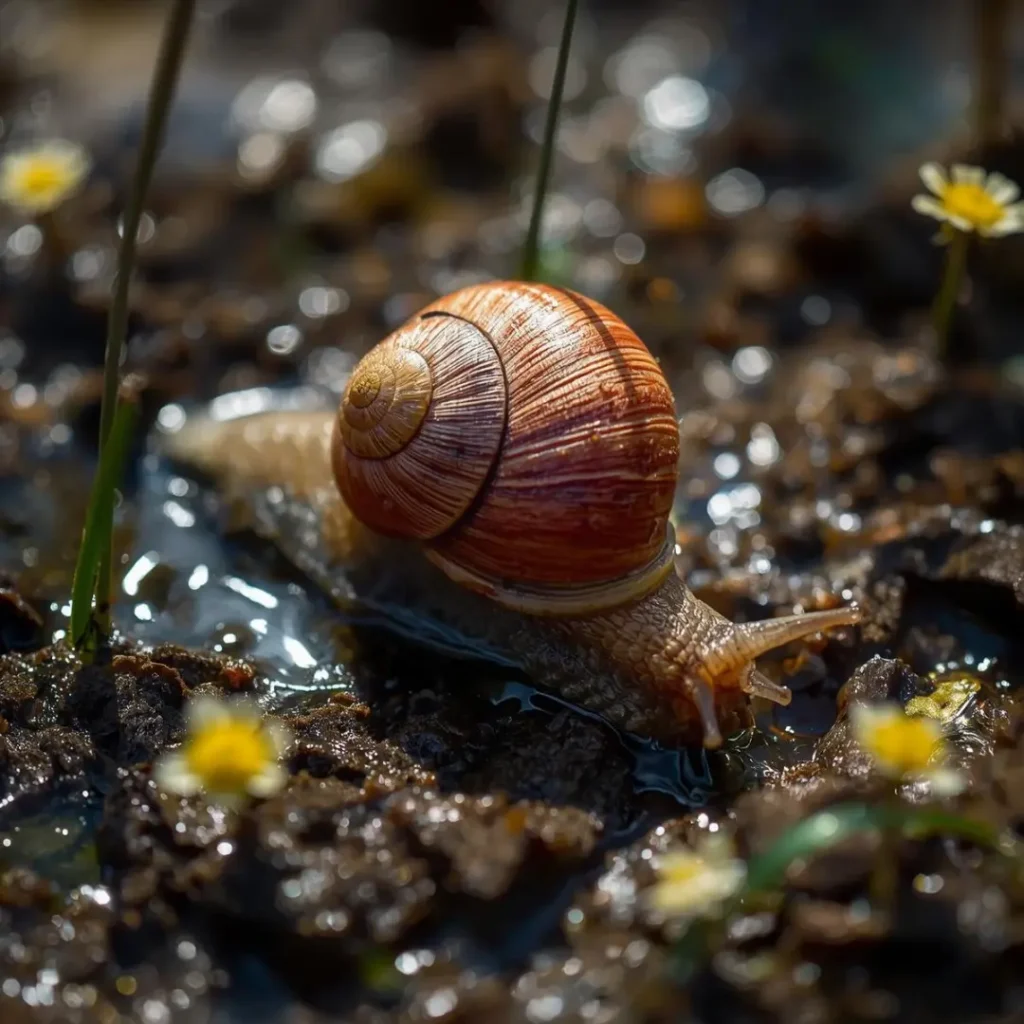
Garden pests, particularly slugs, snails, and earwigs, are nocturnal creatures. They are soft-bodied and lose moisture rapidly in the sun, so they hide during the day and emerge to feed at night. These pests rely on moisture for locomotion; their slime trails require a damp surface to travel efficiently.
- The Night Watering Mistake: By soaking your garden in the evening, you are building a “Superhighway” for these pests. You are turning dry, rough soil into a cool, slippery slide. You make it incredibly easy for them to glide from plant to plant, feasting on your crops.
- The Morning Advantage: If you water in the morning, the top layer of the soil dries out by sunset. This creates a dry, crusted barrier—a biological “No Man’s Land”—that is difficult and uncomfortable for slugs to cross. Simply by keeping the soil surface dry at night, you can reduce pest damage significantly without using a single drop of pesticide.
3. Root Hypoxia: Suffocating Your Plants
Plants are not just drinking straws; they are living organisms that need to breathe. While leaves exchange gases (CO2 and Oxygen) through stomata, roots also need oxygen.+1
In soil science, we talk about “Pore Space”—the tiny gaps between soil particles. Ideally, these gaps are filled with a 50/50 mix of water and air.
- The Transpiration Stop: During the day, the sun pulls water up through the plant (Transpiration). At night, photosynthesis stops, and transpiration slows down to almost zero.
- The Suffocation: If you water heavily at night, the water sits in the soil because the plant isn’t drinking it. This fills the pore spaces completely. When roots sit in 100% water for too long without air, they suffer from Hypoxia (oxygen deprivation).
Think of it like sleeping with a wet blanket over your face. Over time, this weakens the root system, causes root tips to die back, and makes the plant susceptible to rot. Strong, deep roots are built by a cycle of wetting and drying, not by constant saturation.
The Solution: The Golden Window (05:00 AM – 09:00 AM)
So, when is the optimal time? The answer lies in the sun. The absolute best time to water your garden is early in the morning, ideally between 5:00 AM and 9:00 AM.
Why is this the engineered “Golden Window”?
- Turgor Pressure: You hydrate the plant before the stress of the midday sun hits. It fills the cells with water (Turgor), making the plant stand tall and resist wilting.
- Efficiency: The air is cool, so less water is lost to evaporation compared to midday watering.
- Safety: Any water that accidentally lands on the leaves will dry off quickly as the sun rises, preventing the fungal growth we discussed earlier.
What if you aren’t a morning person? If you cannot wake up early, use technology. Install a simple hose timer. It costs less than a dead rose bush and will water your garden while you sleep. Alternatively, switch to Drip Irrigation. Drip systems deliver water directly to the soil, keeping leaves dry, which makes evening watering safer (though morning is still superior for root health).
Conclusion: Work with Nature, Not Against It
Gardening is not just about intuition; it is about understanding the engineering of nature. The ecosystem in your backyard operates on a strict biological clock.
If you have been watering at night, don’t feel guilty—it is a common misconception. But now that you know the science, it is time to make a change. Set your alarm, buy a timer, or automate your system. Switching to morning watering is the single most effective, free, and chemical-free way to improve your garden’s health immediately.