If you spend more than five minutes on gardening forums or social media, you will inevitably encounter the ultimate viral gardening hack: “Put Epsom salt in the planting hole for your tomatoes! It prevents rot, makes the plants huge, and guarantees a massive harvest!”
Generations of gardeners have passed down this advice. Today, millions of people faithfully buy boxes of bath salts and dump them into their vegetable beds every spring.
But as a Forest Engineer, I do not believe in magic powders or internet miracles. I believe in soil chemistry, plant physiology, and data. When we strip away the folklore and look directly at the molecular biology of a tomato plant, the truth about Epsom salt is completely different from what the internet tells you.
In fact, if you use it incorrectly, you might actually be destroying your tomato harvest. Here is what the science actually says.
1. The Chemistry: What Exactly is Epsom Salt?
Before we put anything into our soil, we need to know its chemical composition. In soil engineering, we don’t rely on brand names; we look at the elements.
Epsom salt is not table salt (Sodium Chloride), which would kill your plants. Epsom salt is Magnesium Sulfate. It provides exactly two nutrients to the soil:
- Magnesium (Mg): A vital element that sits at the center of the chlorophyll molecule. Without it, plants cannot photosynthesize.
- Sulfur (S): An essential element for protein synthesis and enzyme function.
That is it. It does not contain Nitrogen, Phosphorus, Potassium, or Calcium.
2. The Great “Blossom End Rot” Myth
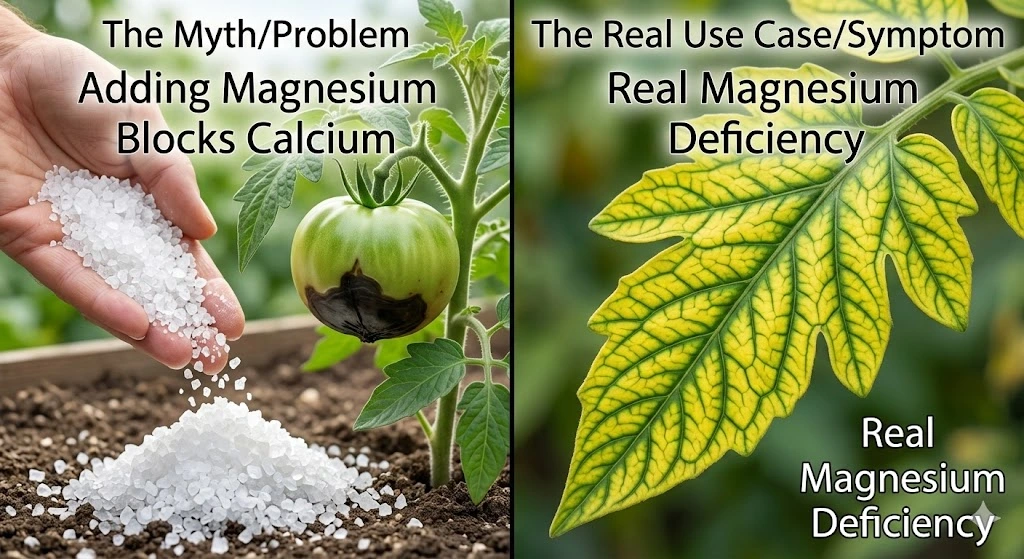
The most common reason people use Epsom salt is to cure Blossom End Rot (BER)—that heartbreaking condition where the bottom of your beautiful green tomato turns into a black, sunken, leathery scab.
The internet claims Epsom salt prevents this. The science says the exact opposite.
Blossom End Rot is caused by a Calcium deficiency in the fruit. It occurs when the plant cannot transport enough calcium up the stem to the rapidly growing tomato cell walls, causing those cells to collapse and die.
Here is where the engineering concept of Ion Antagonism comes into play. In the soil, Calcium and Magnesium are both positively charged ions (cations). A plant’s roots have a limited number of “receptor sites” to absorb these ions.
When you dump Epsom salt (Magnesium) around a tomato plant, you flood the soil with Magnesium ions. These Magnesium ions compete with the Calcium ions for space in the plant’s roots. Because you artificially altered the balance, the plant absorbs the Magnesium and ignores the Calcium.
The Verdict: By adding Epsom salt to cure Blossom End Rot, you are actively blocking the plant from absorbing the Calcium it desperately needs. You are literally making the rotting problem worse.
3. When Do Tomatoes Actually Need Epsom Salt?
Does this mean Epsom salt is completely useless? No. It is a highly effective, fast-acting fertilizer, but only if your soil is actually deficient in Magnesium.
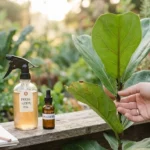
How do you know if your tomato plant has a Magnesium deficiency? The plant will tell you through a very specific visual symptom called Interveinal Chlorosis. Because Magnesium is mobile within the plant, if the plant isn’t getting enough from the soil, it will steal Magnesium from its older, lower leaves to support the new growth at the top. The lower leaves will turn bright yellow, but the veins of the leaf will remain dark green.
If you see this exact pattern, a foliar spray of Epsom salt mixed with water can provide an instant rescue. If the leaves are completely green and healthy, adding Epsom salt does absolutely nothing beneficial.
4. The Engineer’s Approach: Stop Guessing, Start Testing
The biggest mistake home gardeners make is treating their soil like a random chemistry experiment. They pour coffee grounds, crushed eggshells, and Epsom salts into the dirt, hoping for a magical reaction.
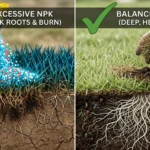
In forestry and agriculture, we never amend soil without a baseline metric. Adding nutrients to soil that doesn’t need them leads to toxic build-ups, nutrient lockout (like the Calcium/Magnesium issue), and environmental runoff.
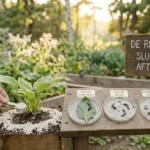
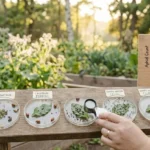
If you want to grow champion tomatoes, stop buying bath salts and spend that money on a professional laboratory Soil Test. For about $20, a lab will tell you the exact pH, Cation Exchange Capacity (CEC), and nutrient profile of your garden.
If the test says you lack Magnesium, apply Epsom salt. If it says your Magnesium levels are fine, put the box back in your bathroom cabinet.
Conclusion: Trust Biology, Not Trends
Tomato plants are highly complex biological machines. They require a balanced diet of macro and micronutrients, consistent watering, and healthy soil biology to thrive.
Epsom salt is a specific tool for a specific chemical problem. It is not a miracle cure, it does not prevent Blossom End Rot, and blindly dumping it into your garden is terrible engineering.
Treat your garden with scientific respect. Give your plants what they actually need, and they will reward you with a massive, healthy harvest.